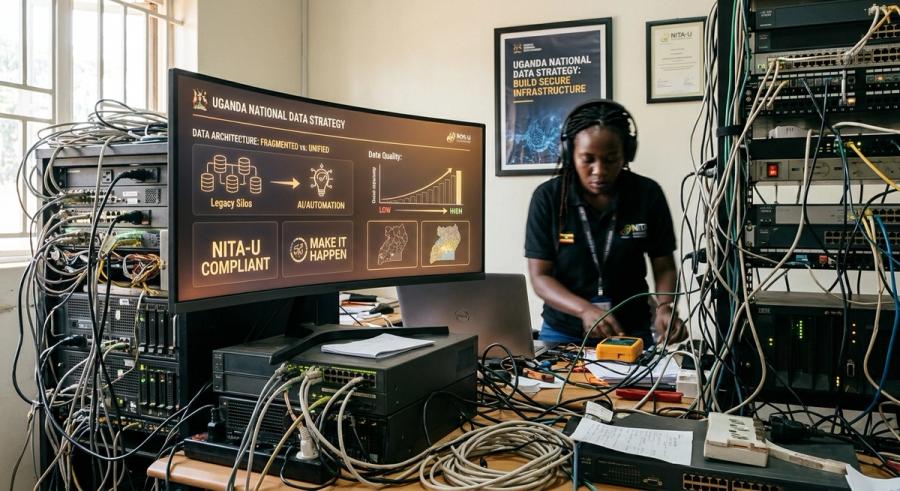
Picture a shop in a trading town like Lira or Kabale: an electronics dealer, a pharmacy, a hardware store that has run on a Facebook page and a phone number for years. Not because the owner doesn't want more customers. Because the internet out there has always been the kind that drops when it rains and crawls when the tower is busy, and nobody builds a proper website for a connection like that.
That excuse just got a lot harder to make.
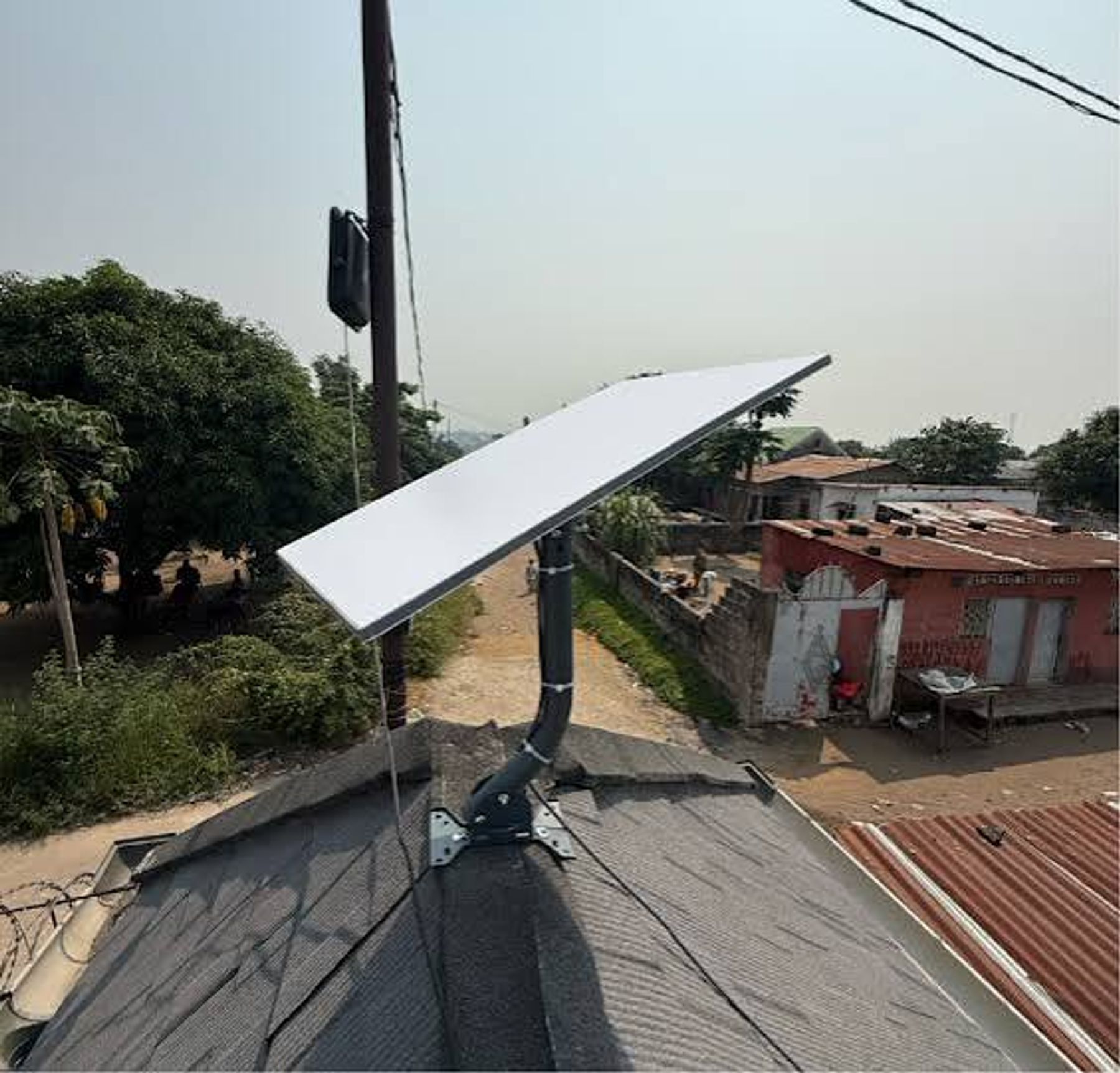
On September 2, Starlink switched on commercial service in Uganda. It wasn't a quiet rollout. Months earlier, in May, the Uganda Communications Commission signed an operational licence agreement with Starlink, witnessed by President Museveni himself, that requires the company to set up a national gateway and a physical office here rather than simply beam signal in from outside. UCC Executive Director Nyombi Thembo put his name to an agreement that, for the first time, makes a satellite internet provider answer to Kampala instead of floating above it.
A fast connection that still costs real money
Let's be honest about the price first.
A 100 Mbps residential package runs about UGX 203,704 a month. The hardware kit alone is roughly UGX 1,743,778, plus a regulatory fee of UGX 437,036 (Starlink's own figure is $100 plus VAT), plus shipping. Add it up and a new customer is looking at an initial outlay north of UGX 2.2 million before the first monthly bill lands.
Compare that to MTN's 100 Mbps fibre at UGX 195,000 a month (or UGX 110,000 with auto-renewal), or Airtel's fibre-to-the-home package starting at UGX 99,000. On price alone, Starlink loses to fibre, every time fibre is actually available.
That's the catch, and it's also the opening. Fibre isn't available everywhere. Starlink's real pitch was never to Kampala, where MTN and Airtel already fight it out underground. It's to the business in a town fibre never reached and a tower never served well: schools, health facilities, shops that have simply never had a serious, dependable connection to buy, at any price.
The internet showed up. The website didn't.
This is the part worth sitting with.
For years, the honest answer to "why doesn't your business have a real website" in a lot of upcountry Uganda has been some version of "what for, the net here can't even load it." It was a fair answer. The infrastructure genuinely wasn't there.
Now, for a growing number of towns, it is. And the businesses that were waiting for permission to go digital just lost their best excuse.
It's the same mistake as connecting a village to the national grid and discovering half the houses were never wired for power. The electricity arrives right on schedule. Nothing in the house switches on. The infrastructure did its job and the building didn't do its own.
A website is the wiring. Starlink, and the competition it is already forcing out of MTN and Airtel on rural pricing, is the grid. One without the other is just an expensive dish on a roof.
What "ready" actually looks like outside Kampala
We wrote a few weeks ago about how much of an ordinary Ugandan's income already goes toward simply staying online, and why that should change how a website is built in the first place: lighter pages, less wasted data, faster loads on an average phone. That argument hasn't changed. What's changed is that, for some of these towns, the connection on the other end just got a serious upgrade, and a business that's still invisible outside its own Facebook following is leaving money on a road that finally got paved.
A website built for this moment does a few specific things. It shows up when someone searches the town's name alongside what the business sells, not just "Uganda" and the product, because that is how a customer two hours from Kampala actually searches. It puts a WhatsApp click-to-chat button where a customer's thumb already is, because that's still how business gets done here regardless of what's beaming down from orbit. It takes Mobile Money seriously as a checkout option, not an afterthought bolted on at the end. And it's built to load cleanly whether the shop behind it is on fibre, 4G, or a dish that just arrived last month.
None of that requires the business to be in Kampala. It requires someone to have actually built it with an upcountry customer in mind, which is the part most template websites and recycled WordPress themes never bothered to do.
The pressure moves, it doesn't disappear
Starlink will not solve Uganda's connectivity gap on its own. It's priced for a business that's already doing well enough to justify UGX 2.2 million upfront, which rules out plenty of the shops that need it most. But it has done something that matters beyond its own subscriber numbers: it has put real pressure on MTN and Airtel to defend rural customers they could previously take for granted, and it has proven that serious bandwidth outside Kampala is no longer a theoretical product.
The infrastructure excuse is dying, one town at a time. When it finishes dying in yours, the only thing left standing between that business and a customer searching from their phone will be whether anyone built something worth finding.
If your business operates outside Kampala and still doesn't have a real website, that's the conversation worth having now, while the connection is new and the competition hasn't caught up yet. Make It Happen builds websites that work for the Uganda your customers actually live in, not the one with permanent fibre and a backup generator.
The signal has arrived. Make sure something is actually there to receive it.