The live chat industry made a quiet decision long ago about where the chat bubble belongs. It was a sensible decision. It was also made without the one person it affects most. At Make It Happen, we built Talk 2 Me to ask them.
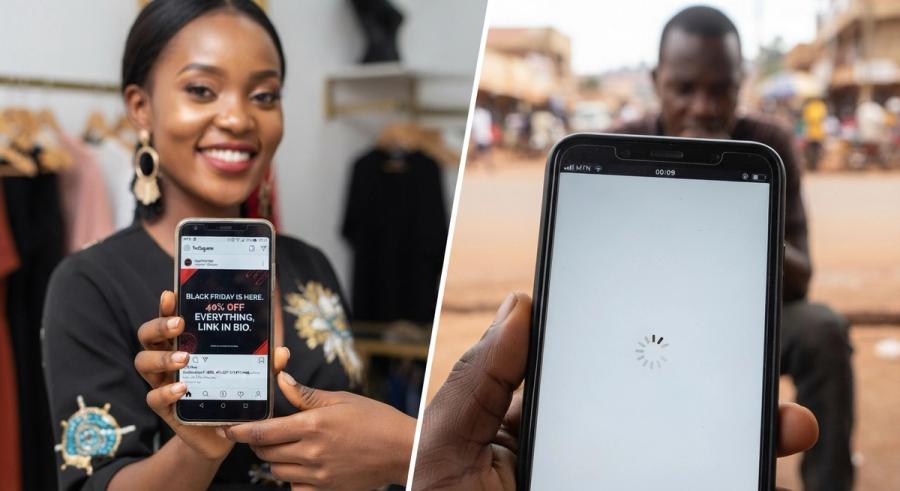
Picture a Saturday afternoon in Kampala. A woman stands in a queue at the bank, phone in hand, trying to finish an online order for UGX 85,000 before she reaches the counter. She fills in her details. She reaches for the "Pay now" button.
And taps a chat bubble instead.
(This is an illustration, but you have probably lived a version of it.)
The bubble says, "Need help? We're here!" It is cheerful. It is also sitting directly on top of the button she needs. It is the digital equivalent of a shop assistant who stands in front of the till to ask if you need anything.
By the time she wrestles around it, the teller is calling her number. She closes the tab. The order is never placed.
Nobody did anything wrong. The bubble was only trying to help.
The corner was a decision, not a law
Let's be fair to the industry. Bottom right was a smart default. Thumbs reach it, visitors expect it, and every vendor needed somewhere to start.
But a default is just a decision someone made once, on behalf of everyone, and then stopped revisiting.
Every phone is different. Some are older Androids where the keyboard swallows half the screen. Some are on a checkout page where that corner is the most valuable patch of pixels on the site.
The corner suits the business. Has anyone checked whether it suits the customer?
So we asked a different question
Not "where should the chat go?"
Where does the customer actually want it?
On Talk 2 Me, the chat bubble is draggable. The customer grabs it and puts it wherever they like, on a phone or a desktop. Off the button. Out of the way.
It is a small thing. But a support tool that blocks the action customers came to complete is, politely, working against the business that installed it.
Knowing the customer is the other half
Talk 2 Me also includes Customer Intelligence, still in beta and improving with real feedback. It gathers browsing behaviour so your agents can see who visits, which pages they read, where they come from, and who is worth a conversation. Visitors are grouped as VIP, returning, new or anonymous.
Agents can also ask their own data a plain question, like "Which visitors came back this week but never chatted?" and get an answer back.
A good shop assistant notices when you have walked past the same shelf three times.
Everything else your team needs
- One-snippet install. Paste one script before the closing body tag. It works on any site, including WordPress and Shopify.
- A shared inbox. Assign a chat and resolve it in one click.
- Live typing. See what a visitor is typing before they hit send.
- Quick replies. Type a slash and a saved answer appears, shared across your team.
- File sharing. Send and receive files inside the conversation.
- Analytics. See how your team is doing.
- Replies from any phone. Add Talk 2 Me to your home screen and get an alert for every new chat.
- An assistant for your agents. It suggests replies and answers questions about a customer or your workspace.
- A 30-day free trial. Cancel anytime.
Why we built a chat tool
Because we keep hearing the same sentence from businesses across the region: "We just use WhatsApp."
WhatsApp is wonderful, but a personal chat app has no queue, no assignment, and no easy way to tell what was missed overnight. Somewhere between the second phone and the fifth unread message, a customer quietly disappears.
Too many customers leave at a conversation nobody answered. Some leave at one that got in their way.
Let the customer hold the controls
Talk 2 Me is live now, and the first 30 days are on us. Start your free trial at talk-to-me.live, then drag the bubble wherever you like.
Support should stand beside the customer, not in front of the button.